Rescuing feral cats requires three essential components: a humane trap, knowledge of your state’s animal custody laws, and a working relationship with a veterinarian or TNR (trap-neuter-return) program. The process typically takes 24 to 72 hours from initial trap placement to veterinary intake, but the legal groundwork must be completed first. In 2026, most jurisdictions classify feral cats as either wild animals exempt from trespass protections or as community animals subject to local ordinances, and acting without understanding this distinction can expose rescuers to civil liability or criminal charges for theft or animal interference.
The impulse to help a struggling feral cat is powerful, but compassion alone doesn’t protect you from legal consequences. Feral cats exist in a murky space within animal law. Unlike domestic pets with clear ownership or wildlife with federal protections, feral cats occupy what legal scholars call a “liminal status,” neither wholly owned nor wholly free. Some states recognize caregivers’ rights under premises liability law, while others impose strict custody rules the moment you confine an animal. This legal ambiguity makes rescuing feral cats as much a matter of statutory research as it is fieldwork.
The stakes extend beyond individual rescuers. How we approach feral cat rescue shapes broader animal protection policy. Advocates have spent decades building frameworks that balance public health concerns, ecological impact, and the humane treatment of animals who didn’t choose their circumstances. When rescues are conducted legally and transparently, they strengthen the case for systemic solutions like municipal TNR funding and anti-abandonment enforcement. Missteps undermine that progress.
This guide provides the procedural and legal foundation to rescue feral cats responsibly, ensuring your intervention helps the animal without exposing you to avoidable risk.
Understanding Feral Cats: Legal Status and Protection Rights
Under Canadian law, a feral cat is generally defined as a domestic cat (*Felis catus*) living independently of human care, typically born in the wild or abandoned long enough to revert to unsocialized behavior. Unlike stray cats, which are lost or abandoned pets retaining some socialization, feral cats exhibit minimal human contact and survive through hunting or scavenging. This behavioral distinction carries legal weight: feral cats are usually classified as unowned animals with no legal guardian, placing them in a gray zone between wildlife and domestic animals.
The legal status of feral cats varies significantly across provinces and municipalities in 2026. Most provinces treat them under provincial animal protection statutes, such as Ontario’s *Provincial Animal Welfare Services Act* or British Columbia’s *Prevention of Cruelty to Animals Act*, which establish general welfare obligations but do not always specify feral cat management. Municipal bylaws fill gaps by regulating feeding, trapping, and population control measures. For example, some cities prohibit feeding feral colonies without permits, while others have formal TNR (Trap-Neuter-Return) programs recognizing colony caretakers’ roles without conferring legal ownership.
Ownership rights become particularly complex when someone intervenes. Feeding or sheltering a feral cat repeatedly can establish a duty of care in some jurisdictions, potentially making you legally responsible for its welfare and any damage it causes. Courts in several provinces have recognized “de facto ownership” when caretakers provide ongoing support, triggering liability for veterinary neglect or nuisance claims from neighbors.
Protection rights for feral cats stem primarily from anti-cruelty provisions. Federal jurisdiction under the *Criminal Code* prohibits willful harm, while provincial statutes mandate humane treatment and prohibit abandonment. However, enforcement remains inconsistent. Feral cats lack the explicit protections afforded to owned pets, and some municipalities still classify them as nuisances subject to removal or euthanasia. Advocacy efforts in 2026 increasingly push for standardized legal recognition of managed colonies and mandatory TNR protocols, but jurisdictional fragmentation persists. Understanding your local legal landscape is essential before initiating any rescue operation.

Legal Considerations Before Rescuing a Feral Cat
Before you attempt to rescue a feral cat, understanding your legal position is essential to avoid criminal charges, civil liability, or unintended harm to the animal. Canadian law treats feral cats as unowned property in most jurisdictions, but this status does not grant blanket permission to intervene on private land or circumvent municipal regulations. Your authority to act depends on property rights, local bylaws, provincial animal protection statutes, and the specific circumstances of the cat’s distress.
Property rights present the first legal barrier. Entering private property without consent to rescue a feral cat constitutes trespass, regardless of your humane intent. You must obtain explicit permission from the landowner or occupier before setting traps or conducting any intervention on their premises. Even on public land, some municipalities prohibit unauthorized trapping or require permits for animal capture activities. Municipal animal control bylaws vary widely: certain jurisdictions authorize residents to capture animals trespassing on their own property, while others reserve that power exclusively for licensed animal control officers or designated humane societies. Verify your municipality’s specific provisions before acting.
Provincial animal protection legislation also imposes obligations. While these laws typically mandate intervention to relieve severe distress, they do not automatically authorize you to seize an animal. In cases of obvious suffering or neglect, the law may support emergency intervention, but you should document the conditions thoroughly and notify authorities promptly to establish justification. Proceeding without legal grounds exposes you to charges of theft, unlawful confinement of an animal, or violation of custody provisions if another party claims ownership.
Liability considerations extend beyond criminal exposure. If your rescue attempt injures the cat, damages property, or results in human injury, you may face civil claims. Provincial animal welfare statutes and common law impose a duty of care once you assume custody of an animal, meaning negligent handling or inadequate post-rescue care can trigger liability even if your initial intervention was lawful.
Before commencing any rescue operation, complete these legal checkpoints:
- Confirm property access rights by securing written or documented verbal permission from the landowner
- Review municipal bylaws governing animal trapping, capture permits, and reporting requirements
- Contact local animal control or a recognized humane society to determine if intervention falls within their jurisdiction
- Assess whether the cat’s condition meets the legal threshold for emergency intervention under provincial animal protection law
- Arrange pre-approved veterinary care or shelter placement to fulfill your duty of care post-capture
- Document all observations, communications, and permissions in writing to establish legal justification if challenged
Intervention is legally justified when the cat faces imminent harm, severe injury, or life-threatening conditions that meet statutory definitions of distress, provided no less intrusive alternative exists and you can demonstrate reasonable belief that delay would worsen suffering. In all other cases, coordinating with municipal animal services or registered animal welfare organizations is the legally sound approach. Their statutory authority to intervene, seize, and rehome animals provides legal cover that private individuals lack, reducing your exposure while ensuring the cat receives protection under formal legal frameworks.
Tools and Materials Required for Feral Cat Rescue
Successful feral cat rescue requires specific equipment designed to protect both rescuer and animal while meeting legal standards for humane handling. Acquiring proper tools before attempting intervention prevents improvisation that could cause injury, violate animal welfare regulations, or compromise the rescue operation.
The centerpiece of any feral rescue is a humane box trap, typically measuring 32 inches in length. These spring-loaded traps feature a rear trip plate that closes the door when the cat steps inside to reach bait. Wire construction allows ventilation and visibility while preventing escape. Purchase traps specifically labeled for cats, raccoon or skunk traps have different dimensions and trigger mechanisms. Canadian animal welfare standards require traps that don’t cause physical harm, so avoid jaw-type or snare devices entirely.
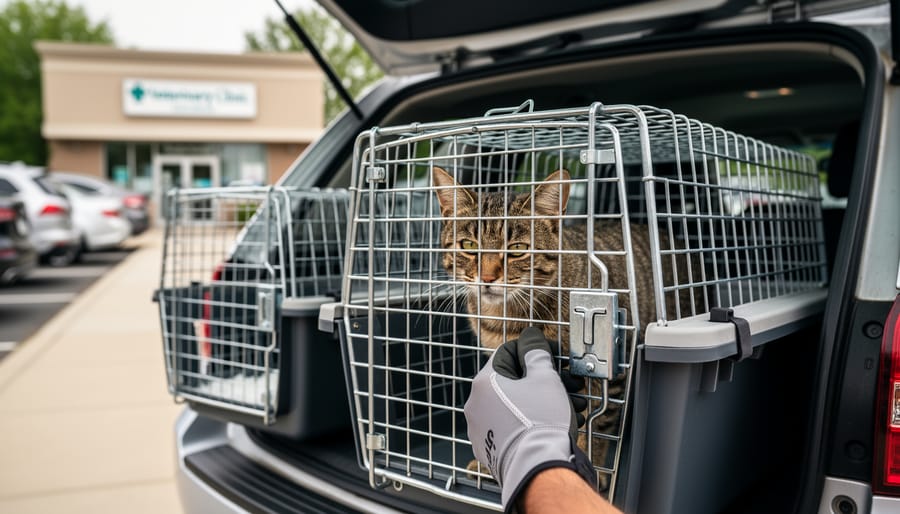
A heavy-duty cat carrier with secure latching provides essential transport capability. Choose carriers with top and front openings for easier transfer from trap to carrier. Hard-sided plastic models withstand scratching and prevent escape better than soft fabric alternatives. Ensure the carrier meets airline-quality construction standards, as these align with provincial transport regulations.
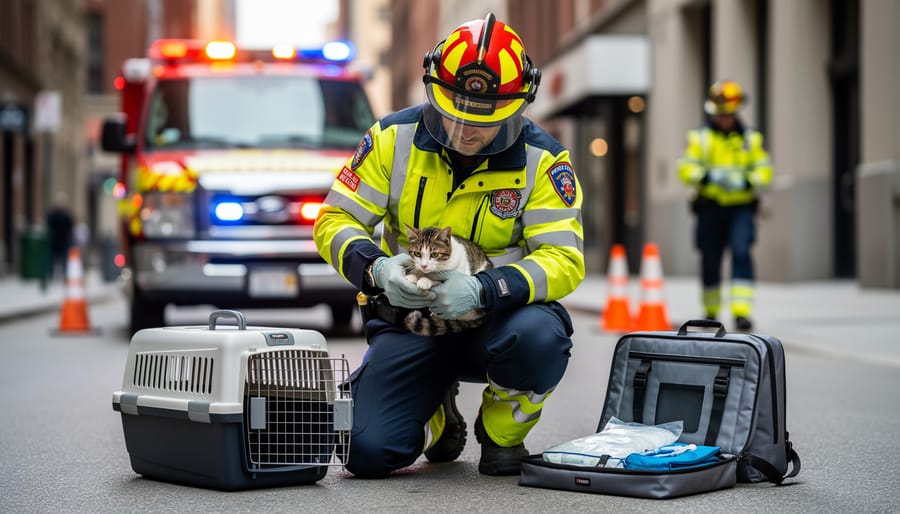
Protective equipment safeguards the rescuer during close-quarter handling. Heavy leather gloves extending past the wrist prevent bites and scratches, though they reduce dexterity. A thick long-sleeved jacket and safety glasses protect against defensive attacks. Keep a large towel available for covering traps, which calms frightened cats by blocking visual stimuli.
Documentation tools establish legal compliance. A smartphone or camera captures timestamped photographs of the cat’s condition, location, and any identifying features. A notebook records rescue details including date, time, location coordinates, and observed health status, critical information for veterinary handoff and potential legal verification.
Stock basic first aid supplies: antiseptic, bandages, and emergency contact numbers for veterinary clinics accepting feral intakes.

Safety Protocols for Human and Animal Welfare
Feral cat rescue requires rigorous safety protocols to protect both the rescuer and the animal. Understanding and implementing these measures reduces injury risk, prevents disease transmission, and ensures the intervention remains humane and legally defensible.
Disease Transmission Risks
Feral cats can carry zoonotic diseases transmissible to humans, including rabies, bartonellosis (cat scratch disease), toxoplasmosis, and various parasitic infections. Rabies remains the most serious concern in Canadian provinces where wildlife reservoirs exist. Before any rescue attempt, ensure you have current tetanus vaccination and consider pre-exposure rabies vaccination if you plan regular rescue work. Wear protective gear consistently: heavy-duty leather gloves rated for animal handling, long sleeves, and closed-toe boots. Never attempt to handle a feral cat with bare hands, even if it appears calm or injured.
Bite and Scratch Prevention
Feral cats react defensively when cornered or restrained. Use humane traps rather than direct handling whenever possible. If you must transfer a trapped cat, keep your face and extremities away from cage openings. Cat bites puncture deeply and carry high infection rates; even minor bites require immediate medical attention and antibiotic treatment. Document all injuries with photographs and seek medical evaluation within hours, not days.
Minimizing Animal Stress
Cover traps immediately after capture with a breathable cloth to reduce visual stimulation and calm the cat. Keep noise levels low and avoid sudden movements. Transport in a quiet vehicle, securing the trap to prevent jostling. Prolonged capture stress can trigger fatal conditions in compromised cats, so move swiftly to veterinary care once secured, ideally within two hours of trapping.
Emergency Response Protocols
Maintain a first-aid kit containing wound irrigation solution, sterile gauze, and emergency contact numbers for veterinary services and poison control. If bitten or scratched, wash wounds immediately with soap and running water for five minutes, apply antiseptic, and seek medical attention regardless of severity. Keep detailed incident records including date, time, cat description, and injury nature for potential legal or medical follow-up.
Step-by-Step Process for Rescuing a Feral Cat
Step 1: Assessment and Planning
Before attempting any physical rescue intervention, conduct a thorough multi-day observation of the feral cat to establish baseline behavior patterns and health indicators. Document the cat’s physical appearance, note body condition (ribs visible, healthy weight, or obese), coat quality, obvious injuries, limping, discharge from eyes or nose, and any signs of labored breathing. Record these observations with timestamped photos or video that can serve as legal evidence if authorities later question your intervention.
Assess the cat’s demeanor and stress responses. A genuinely feral cat will avoid eye contact, maintain maximum distance from humans, and exhibit frozen or aggressive body language when approached. Note whether the cat appears during consistent timeframes, suggesting predictable trapping opportunities. Identify the cat’s core territory, where it sleeps, feeds, and travels, to determine optimal trap placement locations.
Evaluate environmental factors that affect rescue legality and safety. Confirm property ownership and secure verbal or written permission before placing traps on private land. Check for identification signs suggesting the cat has an owner: a clipped ear indicating prior TNR, a collar (even worn), or regular feeding by residents who may claim ownership. Document weather forecasts, as extreme temperatures require modified timing to prevent harm during captivity.
Map escape routes and hazards near potential trap sites, busy roads, aggressive dogs, or unstable structures that could endanger you or the cat during the operation.
Step 2: Setting the Trap Humanely
Position the trap on level ground along the cat’s established travel route, ideally where you’ve observed consistent activity during your assessment phase. Place it perpendicular to walls or fences rather than parallel, as feral cats prefer entering enclosed spaces from an angle that allows them to see potential escape routes.
Use strongly scented bait such as canned tuna, sardines, or mackerel placed at the far end of the trap, beyond the trigger plate. Create a scent trail with small amounts leading to the entrance, but never place food on the trigger itself, which can cause premature closure before the cat is fully inside.
Cover the trap with a light sheet or towel, leaving only the entrance exposed. This reduces visual stress and creates a den-like environment that encourages entry. Set the trap during the cat’s natural feeding times, typically dawn or dusk, when activity peaks.
Check traps every thirty to sixty minutes without exception. Prolonged confinement causes severe psychological distress and violates animal welfare standards in most Canadian jurisdictions. Never leave traps unattended overnight or in extreme weather conditions. Once a cat enters, cover the entire trap immediately to minimize panic and protect yourself during transport.

Step 3: Securing and Transporting the Cat
Once the trap closes, confirm the cat is fully secured before approaching. Cover the trap immediately with a light blanket or towel to reduce visual stimuli and lower the animal’s stress response. Speak quietly and avoid sudden movements that could trigger panic or self-injury attempts.
Check that the trap door is properly locked and inspect for any gaps or damage that might allow escape during transport. Never attempt to transfer a feral cat to another container at this stage; the trap itself serves as the transport unit. Under provincial animal welfare regulations, you must minimize handling and confinement time.
Secure the covered trap in your vehicle where it cannot slide or tip. The back seat floor or a flat cargo area works best. Maintain moderate cabin temperature and avoid loud music or abrupt braking. Most jurisdictions require direct transport to a licensed veterinarian or registered animal care facility within a reasonable timeframe, typically two to four hours.
Keep a transport log noting capture time, location, and destination for legal documentation. If transporting across municipal boundaries, verify you are not violating any bylaws restricting animal movement without permits.
Step 4: Immediate Post-Rescue Care and Documentation
Once you’ve secured the feral cat and arrived at a veterinary facility or designated assessment location, immediate action is required to meet both welfare and legal obligations. The first priority is a veterinary health assessment to identify injuries, disease, parasites, and vaccination needs. Under Canadian animal welfare legislation, rescuers who assume custody of an animal bear responsibility for ensuring it receives necessary medical care. Document this initial examination thoroughly: photograph visible injuries or conditions, record the veterinarian’s findings, and retain all invoices and treatment records. These documents serve as legal proof that you acted in the animal’s best interest and complied with duty-of-care standards.
If the cat requires emergency treatment, such as wound care, fluid therapy, or pain management, authorize it immediately and document the decision. Simultaneously, report the rescue to the appropriate municipal animal control authority or provincial enforcement agency, especially if the cat was found on private property or shows signs of abuse or neglect. Many jurisdictions mandate reporting within 24 to 48 hours.
Maintain a rescue log that includes date, location, physical description, microchip scan results, and any identification attempts. This record protects you legally and aids in reunification efforts if the cat proves to be owned rather than truly feral.
Verification: Assessing Rescue Success and Next Steps
Verification begins immediately after transport. Document the cat’s physical condition, behavior, and any identifying marks through photographs and written notes. A veterinary examination within 24 hours confirms health status and determines whether injuries, disease, or malnutrition require treatment. This assessment also establishes a legal record that protects you from liability claims regarding the animal’s condition at time of rescue.
Evaluating suitability for socialization versus TNR requires observing specific behavioral indicators during the initial veterinary visit and subsequent holding period. Truly feral cats exhibit extreme fear responses: hissing, spitting, cowering at the back of carriers, and attempting to escape when handlers approach. Cats displaying tolerance for human proximity, accepting food in human presence, or making eye contact may be stray rather than feral and could adapt to adoption. Most jurisdictions permit a 72-hour observation period before committing to a placement decision.
Successful rescue verification involves confirming these critical elements:
- Veterinary health assessment completed and documented within 24 hours
- Rabies vaccination administered or scheduled according to provincial requirements
- Behavioral evaluation determining feral versus stray status recorded
- Microchip scan performed to rule out owned animal status
- Spay/neuter procedure scheduled if cat qualifies for TNR program
- Placement decision documented with supporting observations and veterinary input
Municipal bylaws in most Canadian cities require reporting rescued feral cats to animal control within specific timeframes, typically 48 to 72 hours. Failure to report can result in fines or charges under animal custody regulations. If proceeding with TNR, coordinate with recognized organizations that hold permits for colony management. These groups provide legal authority for returning sterilized cats to their original territory, which individual rescuers typically lack. For socialization candidates, transfer to licensed rescue organizations ensures compliance with adoption regulations and protects you from unlawful rehoming liability.
Common Legal Pitfalls and How to Avoid Them
Feral cat rescuers often inadvertently violate property laws by entering private land without permission, even when motivated by urgent welfare concerns. Trespass remains a civil and potentially criminal offense regardless of intent, and courts rarely recognize animal distress as a defense. Always obtain explicit landowner consent before setting traps or conducting rescue operations on private property; if access is denied, contact municipal animal control or a local animal welfare organization with legal authority to intervene. Provincial trespass legislation across Canada establishes clear liability for unauthorized entry, and damages claims can follow even well-meaning rescues.
Failing to document the rescue creates serious evidentiary gaps that undermine both welfare claims and legal defenses. Photograph the cat’s condition, location, and any identifying features before capture; record dates, times, and circumstances; and retain veterinary records immediately following intervention. This documentation proves due diligence, supports custody decisions, and protects against allegations of theft or improper handling. Many rescuers also neglect mandatory reporting requirements under municipal bylaws, which can mandate notification within 24 to 48 hours when capturing unowned animals.
Improperly claiming ownership or custody over a feral cat without following legal processes invites disputes and potential charges. Even genuinely feral cats may have caretakers who provide food or shelter, creating quasi-ownership interests recognized in some jurisdictions. Never assume immediate possession rights; instead, coordinate with local shelters or animal services to establish lawful custody, particularly before rehoming or altering the animal. Maintain transparent communication with authorities and follow jurisdiction-specific protocols for intake, holding periods, and placement to ensure your rescue efforts remain legally defensible and ethically sound.
Frequently Asked Questions About Feral Cat Rescue
Who has legal authority over a feral cat once I’ve trapped it?
In most Canadian jurisdictions, custody transfers to the municipality’s animal control or a licensed rescue organization upon capture. You act as a temporary custodian with a duty of care, but cannot claim ownership without meeting provincial requirements for abandoned animal acquisition, which typically involve waiting periods and formal notices.
Am I liable if the feral cat injures someone after I release it?
Liability depends on whether you followed proper protocols. If you released a cat without veterinary clearance for rabies or aggressive behavior, you could face negligence claims. Documented TNR procedures with health verification typically shield rescuers from liability, but jurisdictional standards vary.
Is TNR legally recognized in Canada?
TNR programs operate under varied legal frameworks across provinces and municipalities. Some jurisdictions explicitly authorize TNR through bylaws, while others permit it informally through animal control partnerships. Always verify local regulations before implementing TNR, as unauthorized release of trapped animals can violate animal control statutes.
Can I work with my municipality if they oppose feral cat rescue?
Yes. Many municipalities shift policy when presented with evidence-based TNR proposals that address public health concerns and cost savings. Building coalitions with veterinary professionals, documenting population data, and proposing pilot programs often opens dialogue even in resistant jurisdictions.
Beyond these procedural questions, advocates frequently ask whether rescuing feral cats undermines wildlife protection laws. The answer lies in demonstrating that managed colonies with TNR reduce predation more effectively than lethal control by stabilizing populations and preventing vacuum effects. Courts increasingly recognize this nuance when evaluating conflicts between animal welfare and conservation statutes.
Organizations bear specific responsibilities that individual rescuers don’t. Registered charities conducting feral cat programs must maintain liability insurance, comply with charitable fundraising regulations, and document outcomes to justify their public benefit status. They also face higher accountability for ensuring volunteers follow legal protocols, which means robust training programs aren’t optional, they’re a legal necessity to protect both the organization and the animals it serves.
Rescuing feral cats represents more than an isolated act of compassion, it is a meaningful expression of animal protection advocacy grounded in legal awareness and ethical responsibility. Throughout this guide, we have emphasized that effective rescue requires understanding the intersection of animal welfare law, property rights, and municipal regulations that govern feral cat populations in Canada. This legal framework exists to protect both rescuers and animals, ensuring interventions enhance welfare rather than inadvertently causing harm or violating established protections.
As you move forward, whether as a legal professional advising clients, an advocate coordinating community TNR programs, or an individual encountering a cat in distress, your informed action shapes the broader landscape of animal law in Canada. Each legally compliant rescue contributes to precedent, demonstrates the viability of humane intervention models, and strengthens the case for expanding statutory protections for unowned animals. Document your work carefully, collaborate with established organizations that navigate these legal complexities daily, and recognize that procedural rigor amplifies your impact.
The challenges facing feral cats, jurisdictional inconsistencies, gaps in legislative coverage, and public misunderstanding, demand sustained engagement beyond individual rescues. Support policy initiatives that clarify legal status for feral populations, advocate for standardized welfare protocols across municipalities, and contribute your expertise to the evolving discourse surrounding animal protection law. Your commitment to both immediate intervention and systemic change positions feral cat welfare within the larger movement toward comprehensive legal recognition of animal rights in Canada.